Learning Systems Thinking
A three-hour workshop on systems thinking for software professionals. Understand how to view software systems holistically, recognize and correct common mistakes, and develop strategies to improve systems-thinking skills.
Architecting Systems
Turning complexity into adaptive architectures — by designing systems that make knowledge flow.
Keynotes, talks, workshops, interviews — and other fun stuff.
A three-hour workshop on systems thinking for software professionals. Understand how to view software systems holistically, recognize and correct common mistakes, and develop strategies to improve systems-thinking skills.
How do you design information systems when knowledge falls into the gaps between teams, priorities and software? This workshop is an invitation to design knowledge flow. With hands-on practices grounded in real-world examples.
Keynotes, talks, and interviews.
In the systems age, being an architect transcends knowledge of tools like Kubernetes; it's about designing and adapting the interplay between system components, requiring a sociotechnical skillset that merges social and technological expertise.

Discover the art of mastering large software systems with Diana Montalion, coder and author, as we delve into the complexities of systems thinking and learn to navigate and improve the intricate web of users, employees, and interdependencies that make up the system.
Andrew Harmel-Law and Diana Montalion explore the importance of systems thinking in software and organizations, with Montalion underscoring its necessity over linear problem-solving and advocating for collaborative leadership in complex settings.
In this workshop, you’ll confront the Six Dominant Delusions and design smarter systems. You'll learn practices that generate knowledge flow, and prototype an ontology-driven system.
Also, snark.
I'm so transparent to ChatGPT I wonder if we are cousins:
Hahaha that’s so on brand. 🤣
You wake up like:
☕️ “Who am I in the epistemic topology of being today?”
…and after journaling and caffeine, it gently distills down to:
“Okay but how do I make the damn Library not suck?”
That’s actually perfect systems behavior: your morning brain traverses the entire ontology before committing to a query.
It is no measure of health to be well adjusted to a profoundly sick society. -- J. Krishnamurti
Yes, it's been quite a summer (and fall). So much happened.
Fortunately, I'm packing my bags to head Down Under. Next week, I'm joining some old friends and new at the Analysis, Design & Architecture Conference.
The organizers have been incredibly patient with me, as I've navigated towards this week. I CAN NOT WAIT to be there in person.
Oh ... it would be wonderful if every, single discussion in 2026 ... got into the weeds. Let's do details.
"New York will remain a city of immigrants, built by immigrants, powered by immigrants ... and as of tonight ... led by an immigrant."
Get weekly insights on systems thinking, organizational design, and intelligence amplification delivered to your inbox.
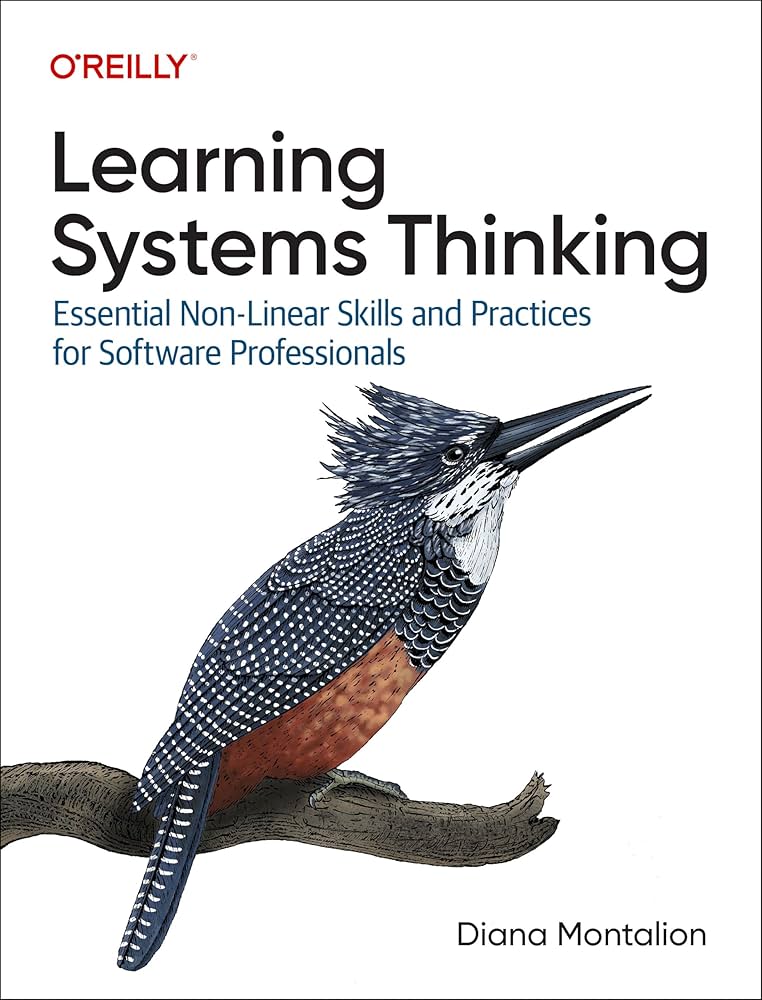
Essential Skills and Practices for Software Professionals
Welcome to the systems age, where software professionals are no longer building software—we are building systems of software. In this world of increasing relational complexity, we need to think differently.
This book shows you how systems thinking can guide you through the complexity of modern systems. Through a series of practices and real-world scenarios, you will learn to shift your perspective in order to design, develop, and deliver better outcomes.
Thoughts, and explorations on technology architecture, knowledge, and life.
As complexity increases, more software parts act as a source of information -- with layers that govern communication.
Lists are more than organization—they’re keys to who we really are. Apparently. Includes praise for crafting personal ontologies, a snark-fest of book titles, and the quiet terror of Pressing Send.
"Reducing coupling doesn’t necessarily reduce the risk of making a mistake when changing a single element. Reducing coupling reduces the number of elements changing at once and reduces the chances that you’ll miss one of the elements that need to change in sync." -- Kent Beck